
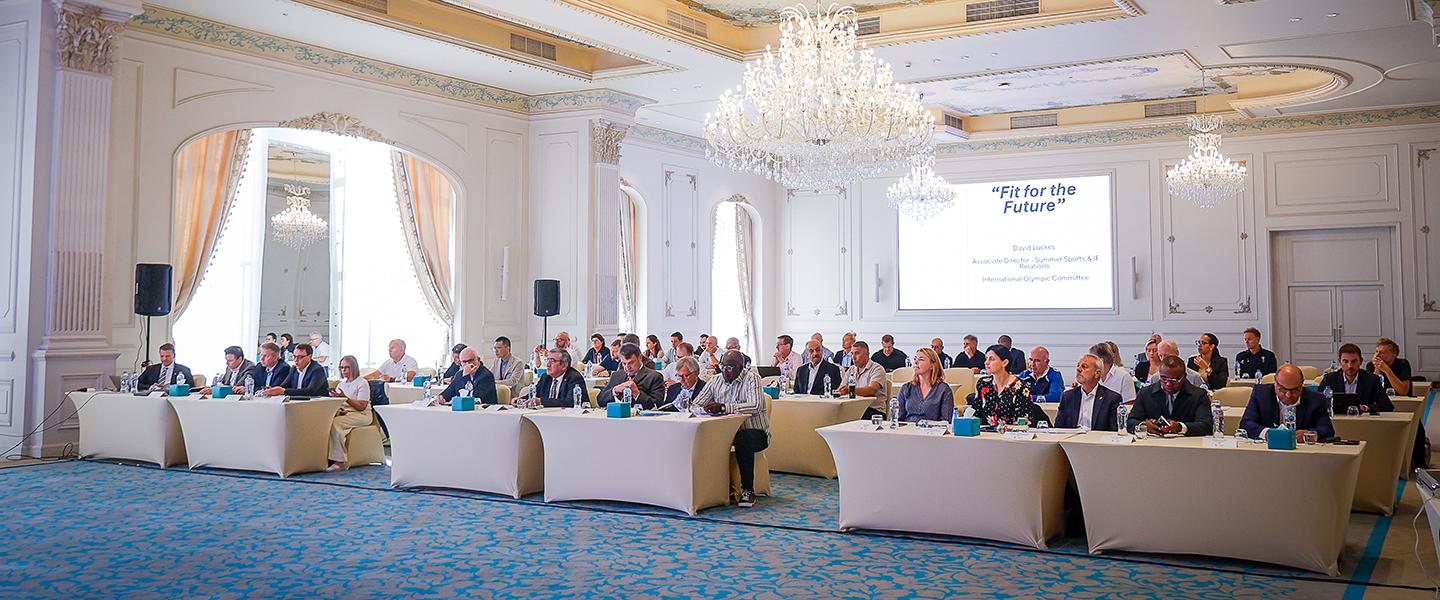
IHF Forum 2026: “The Future of Handball” was the topic of the discussion held in Cairo, attended by various experts: coaches, players, referees, delegates, continental representatives, business leaders, and prominent figures.
The forum was designed as a space for open discussion.
Following the opening sessions, participants divided into three working groups, which included David Luckes, associate director of Summer Sports and Relations with International Federations at the IOC.
Also with Robert Müller Von Vultejus, director of growth at Sportfive.
Among those in attendance were prominent coaches: Jordi Ribera of Spain; Talant Dujshebaev of France; Markus Gaugisch of Germany (women’s team); and Thorir Hergeirsson, former head coach of Norway (women’s team).
Gonzalo Pérez de Vargas, president of the IHF Athletes’ Commission, and Katrine Lunde, chair of the IHF Women’s Handball Working Group, represented the athletes and former players.
In addition, referees, technical experts, continental officials, and business partners also participated in the discussions.
Continental Development
One of the sessions focused on
continental
development, broadening the scope beyond the game itself to encompass the overall development of handball.
Moderated by IHF First Vice President Philippe Bana and co-chaired by CCM member Paul Landuré, the group brought together the presidents of the continental confederations, IHF experts, and representatives responsible for development, training, and competitions.
Marcel Mancilla, president of the South and Central American Handball Confederation, was here giving a speech.
Starting point was deliberately global:
- What is the current state of handball development across the different continents, and where do the greatest opportunities lie?
The participants analyzed the results of the questionnaires submitted by the continental confederations and discussed the differences in performance levels.
From there, the conversation turned to region-specific strategies, recognizing that a development model that is effective in one part of the world cannot simply be transferred, without modification, to another.
Marcel Mancilla, president of COSCABAL, expressed his special gratitude to the presidents of the five sister confederations:
Dr. Mansourou Aremou (CAHB, BEN), Michael Wiederer (EHF, AUT), Mario García de la Torre (NACHC, MEX), and Ricardo Blas (OCHF, GUM), as well as Bader Al-Theyab (AHF, KUW), who joined online.
“They outlined their realities and challenges, the actual status of their activities, and their proposals, based on the questionnaires submitted by each confederation and the differences in performance across continents.”
Some of the points to consider
- Youth and talent development programs were part of the discussion.
- Marketing, promotion, and social media development for the continental confederations also featured prominently.
- The possibility of organizing more IHF events outside of Europe to strengthen handball’s global identity.
“There was a shared conclusion: each continent needs its own strategy,” Mancilla noted.
Teamwork
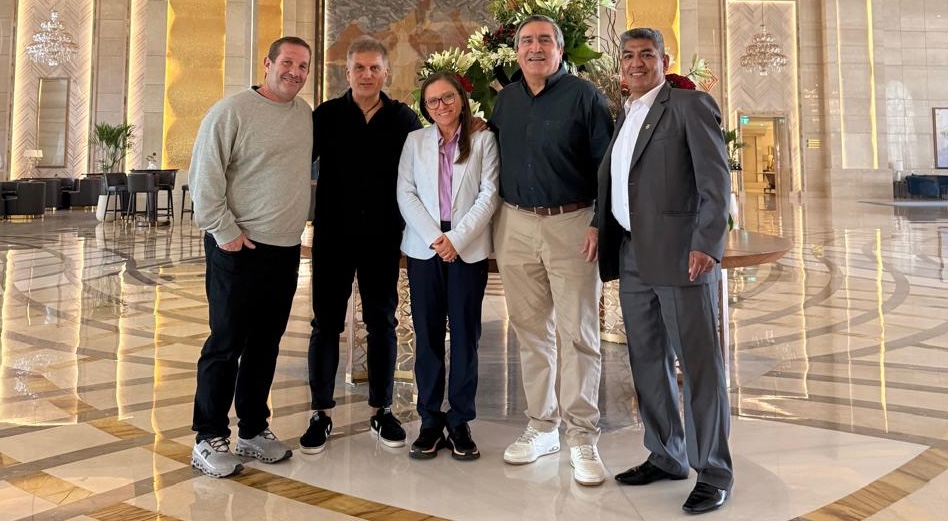
Marcel Mancilla was accompanied at the Forum by representatives from various COSCABAL departments who also serve on the commissions of the IHF in Cairo.
- Cecilia Hernández, Chair of the Technical and Development Commission (CD-IHF);
- Teodoro Adjemian, President of the Referees Commission (PRC-IHF);
- Martín Chilaca, Chair of the Competition Commission (COC-IHF);
- Eduardo Gallardo, COSCABAL representative to the CCM-IHF.
“His work ensures that the proposals made at the Forum are carried forward into the IHF’s technical decisions.”
“Development, officiating, competitions, and coach education are precisely the areas that were discussed, along with the expert insight of Bruno Souza from Brazil on matters related to the Competition Commission.”
Plan The
IHF’s four-year plan was also addressed within this broader framework; participants discussed the foundations of a development program aimed at selected member federations, including selection criteria, priorities, objectives, implementation, and monitoring.
COSCABAL put forward two proposals:
- To validate a differentiated approach based on each federation’s measured level
- Adopt a common diagnostic framework among confederations
Finally, Marcel Mancilla expressed special thanks to the president of the International Handball Federation, Dr. Hassan Moustafa, for making this event possible.
Remember that you can follow us on our social media accounts, Instagram handballscaTikTokhandballscaFacebook Handball SC America Coscabal
If you liked it IHF Forum 2026: “The Future of Handball,” you might also be interested in: COSCABAL Announces Its 2027 Indoor Handball Competition Schedule


